Gender
What Keeps Women Artists Out of the Art World’s Top Echelon?
Women remain underrepresented at the highest levels of the art world. We talked to Yale SOM’s Magnus Resch about his new study tracing the institutional pathways that shape artistic success.

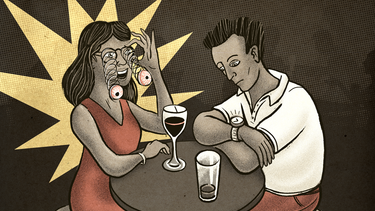
A Man and a Woman Walk into a Bar: How Gender Changes the Perception of a Bad Joke
Yale SOM’s Taly Reich has found one situation in which women, rather than men, are more likely to get the benefit of the doubt: when they tell jokes that fall flat.
How COVID-19 Is Making Gender Inequality Worse in Low-Income Countries—and What to Do About It
Gender disparities in social and economic outcomes, already larger in the developing world than in rich countries, have been exacerbated by the pandemic. Policy action is badly needed to address the compounding of existing inequalities and protect the most vulnerable women.

Weakening Unions Can Lead to Gender Gap in Wages
In 2011, legislation in Wisconsin reduced the power of unions to negotiate teachers’ salaries. Within five years, male teachers started earning more than women did.

What Kamala Harris’s Nomination Means for Women’s Equality
If Joe Biden is elected this November, Kamala Harris would be the first woman and the first person of color to serve as vice president. We asked Prof. Oriane Georgeac, who studies perceptions of diversity, if Harris’s nomination heralds an acceleration of progress for women generally.

Male Scientists Praise Their Own Research More
According to a study co-authored by Yale SOM’s Olav Sorenson, male scientists are more likely than their women colleagues to use words like “novel,” “excellent,” and “unique” to describe their own work in the titles and abstracts of research articles.

When Women Speak, Do People Listen?
In a study of farming villages in Malawi, Yale SOM’s Mushfiq Mobarak and his colleagues found that women’s performance on communication tasks seemed to be hindered by how other people received their work.

Single Women Get Lower Returns from Housing Investments
A new study from Yale SOM’s Kelly Shue and Paul Goldsmith-Pinkham finds that single women who buy and sell real estate lose out on an average of $1,600 per year.

In Finance Field, Gender Disparities Are Significant—But Shrinking
More women are being hired for finance positions at top business schools, according to a study co-authored by Yale SOM's Heather Tookes, but progress is slow. The study suggests that this may be due to limited collaborator networks.

Competition Can Make Corporate Cultures More Socially Progressive
A study by Yale SOM’s Alexander Zentefis and Gary Gorton suggests a progressive competitor can push a company to change under the right circumstances.

Women Leaders Ascend in the Aerospace and Defense Industry
When Kathy Warden was named CEO of Northrop Grumman this week, she became the third woman CEO among the top five aerospace and defense contractors. Yale SOM’s Jeffrey Sonnenfeld writes that this welcome trend has an echo in the early history of the industry.