Arts/Media
What the Paramount-Warner Bros. Merger Means for Streaming
Paramount won the bidding war for Warner Bros. But media analyst Michael Nathanson ’90 says the combined company will face heavy debt and a shrinking cable business—as well as the pitfalls that have doomed previous media mergers.

Removing Government Notices from Newspapers Reduces Citizen Participation in Decision-Making
Yale SOM’s Anya Nakhmurina finds that weakening a centuries-old requirement to publish public notices about local government actions in newspapers decreases residents’ engagement and may have allowed unpopular decisions to proceed under the radar.

Rebuilding Local News, One Town at a Time
Bob Rifkin ’89, president of the board of the Belmont Voice, says the nonprofit model for local news has had a palpable impact on his community—and can do the same for your town.

Netflix Will Win the Fight Over Warner—Even If It Loses
Prof. Jeffrey Sonnenfeld and co-author Stephen Henriques write that either Netflix will succeed in acquiring Warner Bros. Discovery and its crown-jewel assets, or it will get to watch as rival Paramount takes on massive debt and risk.

The Long—Really Long—Buildup
More than 30 years ago, Jeffrey Rudolph ’78 developed a master plan to build the California Science Center into a center of science, learning, and discovery. He’s still working away on it.

Selling Art in an Age of Disruption
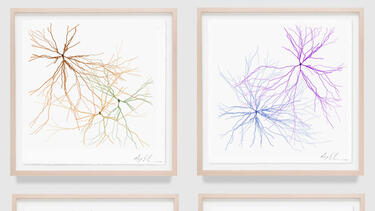
Ariel Hudes ’18 is vice president for strategic projects and operations at Pace Gallery and the head of Pace Verso, which helps the gallery’s artists incorporate technology into their work. We talked to her about the evolving business of art and how artists are using AI tools to execute projects that wouldn’t otherwise be possible.
Creating the Bilbao Effect
The startling success of the Guggenheim Bilbao, which launched in 1997, spawned a new term: “the Bilbao Effect,” as shorthand for the impact a cultural institution can have on the surrounding city. Thomas Krens ’84, Gail Harrity ’82, and others who were present at the inception look back on how industry, marketing, government, art, and architecture came together to make history.

Video: Making the Music Happen
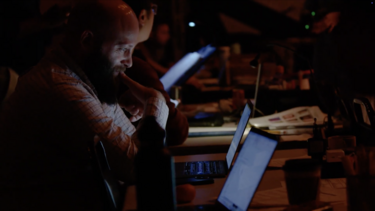
Sam Linden ’19 describes how he built the skills for a career at the intersection of business and the arts.
Museum and Community: Constructing Change
Under the leadership of executive director Zoe Kahr ’06, the Memphis Art Museum is moving into a striking new building under a new name, aiming to use art to help catalyze economic growth and civic energy in the city’s downtown.

Beauty, Power, Art, and Finance
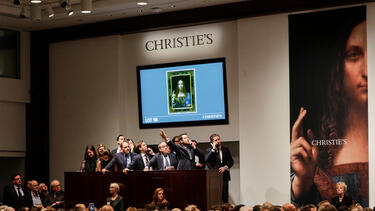
Art, money, and power twist together in complex ways, in a dynamic that may be older than humans. In his research, Yale SOM’s William Goetzmann traces the social meaning of art and money and the ways they set pecking orders, create art superstars, and blow up into senseless bubbles.
Museum and Community: Building on What’s Beloved
Generations of kids have grown up at Durham’s Museum of Life and Science. CEO Carrie Heinonen ’97 is working to expand the museum’s reach by connecting with underserved communities and positioning the institution as a starting point for the region’s STEM workforce pipeline.