Arts/Media
How the Right Business Model Can Fuel Creativity
Selling creative work requires leaders to align art and economics. Yale Insights brought together the CFOs of a video game publisher and a studio that brings graphic novels to Hollywood to explain how they build sustainable businesses while enabling creative people to do their best work.

Museum and Community: Constructing Change
Under the leadership of executive director Zoe Kahr ’06, the Memphis Art Museum is moving into a striking new building under a new name, aiming to use art to help catalyze economic growth and civic energy in the city’s downtown.

Beauty, Power, Art, and Finance
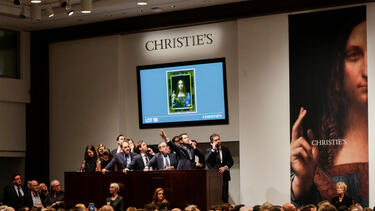
Art, money, and power twist together in complex ways, in a dynamic that may be older than humans. In his research, Yale SOM’s William Goetzmann traces the social meaning of art and money and the ways they set pecking orders, create art superstars, and blow up into senseless bubbles.
Museum and Community: Building on What’s Beloved
Generations of kids have grown up at Durham’s Museum of Life and Science. CEO Carrie Heinonen ’97 is working to expand the museum’s reach by connecting with underserved communities and positioning the institution as a starting point for the region’s STEM workforce pipeline.

Museum and Community: Connecting with a Diverse City
The Museum of Fine Arts, Houston is one of the largest museums in the United States; it is also a local institution in the second-most-diverse large city in the country. Bradley Bailey ’10, the museum’s curator of Asian art, explains how the museum collaborates with immigrant communities to expand the understanding of Asian art.

- Collection No. 10
The Business Behind the Arts
Every cultural institution has a mission that goes beyond the bottom line—enriching a community, preserving human achievement, delivering joy. But that mission also depends on business considerations—assembling financial and human capital, connecting with customers, considering long-term sustainability. We talked with leaders in the arts about the large and small strategic choices that their institutions must make to survive and succeed.

When People Turn On the TV, Are They Actually Watching?
A study of baseball telecasts co-authored by Yale SOM’s Kosuke Uetake suggests that relatively few viewers actively look at the screen. Viewers perk up during suspenseful moments, suggesting that changes to advertising or even the structure of baseball games could make ads more effective.

Do Oscar Wins Pay Off?
We asked Prof. Abraham Ravid, who studies the economics of the film business, to break down the financial stakes of Hollywood’s biggest night.

Why Do Museums Matter?
Daniel Weiss ’85, former president and CEO of the Metropolitan Museum of Art, discusses the distinctive joys and challenges of leading mission-driven organizations.

Streaming Seeks a Path to Profitability
Only Netflix and Disney turn a profit from streaming. Media analyst Michael Nathanson ’90 says that streamers are turning to bundles, ads, and password crackdowns to survive the disruption and consolidation hitting the industry.

Shining a Light into the Black Box of the Art Market
The opacity of the art market benefits a tiny elite of collectors, gallerists, and artists, says Yale SOM's Magnus Resch, but makes it harder for most artists and art lovers to connect.