All Insights Articles
Testing Sewage Can Provide an Early Warning of COVID-19 Outbreaks
Earlier this year, a team of Yale researchers showed that the concentration of COVID-19 RNA in sewage mirrors the spread of the disease through a population. In a new study, they find that testing sewage can serve as an early indicator of an outbreak relative to hospitalizations.

Study Finds Hospital Desegregation Didn’t Improve Mortality Rate for Black Infants
Efforts in the late 1960s to desegregate hospitals in the American South did not significantly contribute to improvements in the Black infant mortality rate, finds a new study co-authored by Dean Kerwin Charles.

During the COVID-19 Crash, Investors’ Beliefs Didn’t Match Their Behavior
Despite a general wave of pessimism following the COVID-19 stock crash in March, few investors made significant changes to their portfolios, according to new research from Yale SOM’s Stefano Giglio.

Video: Why You Should Care about Antitrust
We asked Prof. Fiona Scott Morton, former chief economist for the Justice Department’s Antitrust Division and the founder of the Thurman Arnold Project at Yale, to explain why antitrust violations are bad for consumers and how the government can respond.

Rational Order from ‘Irrational’ Actions
Prof. Shyam Sunder outlines a strain of research, drawing on complexity theory, that suggests that outcomes of a social system can be rational even if its individual participants are not rational.

Can We Protect Our Election from the Bots?
More than 50,000 Russia-linked bots were active on Twitter during the 2016 election. Are they back? We talked with Prof. Tauhid Zaman, who has carried out a series of studies identifying bot networks and assessing their impact.

Getting Corporate Diversity Programs Wrong
Yale SOM leadership expert Jeffrey Sonnenfeld, who studied a previous wave of diversity initiatives, describes how such well-intentioned initiatives can go awry—and how to get them back on track.
The Art World in the Age of COVID
COVID created a crisis for the art world when museums, galleries, and art fairs were closed down. Is there reason for hope about what will emerge after the pandemic ends?

A Passionate Startup Pitch Is Powerful—But Can Be Misleading
According to a new study co-authored by Yale SOM’s Song Ma, those with cheerful and enthusiastic presentations are more likely to get venture capital funding—and less likely to build successful ventures.

In Defense of (Mathematical) Models
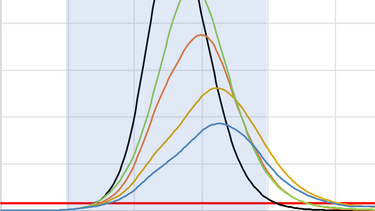
Epidemiological models have played an influential role in governments’ responses to the COVID-19 pandemic. Yale SOM’s Edieal Pinker takes a look back at one of the most influential models and argues that such rigorous efforts at understanding the likely course of the disease, while imperfect, are critical to good decision making.