COVID19
Remote Work Is Linked to a Decline in Financial Misconduct
A new study co-authored by Yale SOM’s John Barrios finds that firms better positioned to shift to remote work during the pandemic experienced a sharp decline in financial misconduct. The likely reason: remote work raised the cost of sustaining collusion.

Feeding First Responders
John Wang SOM/YLS ’09, founder of the Queens Night Market, describes transforming the community camaraderie and diverse food that made the market a draw into a project to feed first responders.
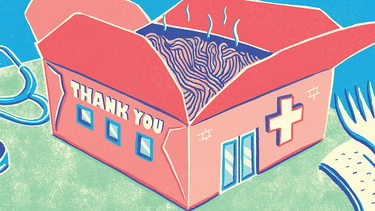
Faculty Viewpoints: Preventing a Financial Crisis
In an online event hosted by the Bank for International Settlement, Andrew Metrick, director of the Yale Program on Financial Stability, discussed the actions that governments have already taken to prevent the COVID-19 pandemic from sparking a full-blown financial crisis, and the challenges still to come.

Art as a Model for Navigating Uncertainty
Crises require creative solutions born of rational and imaginative tools. Amy Whitaker ’01 sees the artist’s capacity to navigate uncertainty as a valuable model.
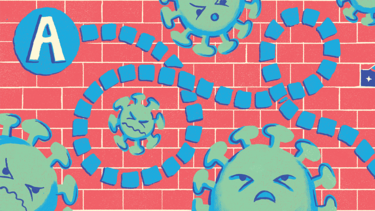
Faculty Viewpoints: The Evolving Workplace
In an online event, Yale SOM faculty members discussed the sudden transformation of the workplace forced by COVID-19 and the potential for more lasting change.

How Will We Tell the Story of COVID-19?
We asked Yale SOM’s Robert Shiller, whose latest book is 'Narrative Economics,' to tell us what collective stories are forming around the pandemic and what they might mean for our economic future.
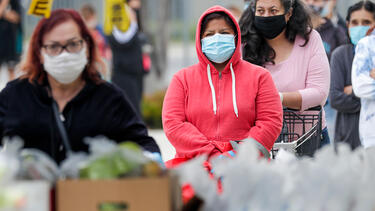
What Is the Impact of Trump’s Immigration Order?
We asked Cristina Rodríguez of Yale Law School, whose research interests include immigration law and policy, to explain the consequences of President Donald Trump's April 22 proclamation on immigration during the COVID-19 crisis.
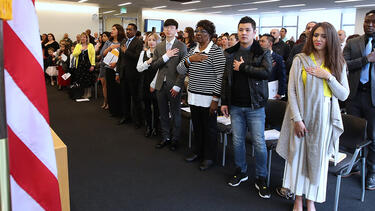
Providing Childcare for First Responders
The childcare provider Bright Horizons, founded by Linda Mason ’80, has pivoted to open centers for the children of first responders. Mason says that however devastating the impacts of the pandemic, there are reasons for hope and pride in this crucible moment.
- Collection No. 6
Leading through COVID
COVID-19 has created leadership challenges for every kind of organization. Some are working to help the sick or the hungry, or to maintain vital services. All are scrambling to stay connected with their employees and remain economically viable. We've been talking with Yale SOM alumni about the challenges that they are facing, and hearing about their professional and personal lives during the global pandemic.

Guiding Family Firms During a Pandemic
Seán O’Dowd ’03 of Silvercrest Asset Management, who works with family firms, says that while conservatively managed businesses are well positioned to handle an ordinary crisis, even well-run small-and medium-sized firms need help from the government right now.

Opening Restaurants in a Pandemic
Seth Goldman ’95, the co-founder of Honest Tea and chair of Beyond Meat, was opening PLNT Burger, a new chain of plant-based restaurants, as the global pandemic struck.