COVID19
Remote Work Is Linked to a Decline in Financial Misconduct
A new study co-authored by Yale SOM’s John Barrios finds that firms better positioned to shift to remote work during the pandemic experienced a sharp decline in financial misconduct. The likely reason: remote work raised the cost of sustaining collusion.

The U.S. Army Adapts to the Pandemic
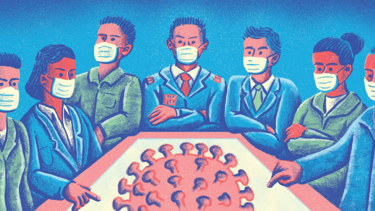
Richard Kidd ’93, who serves as deputy assistant secretary of the army for strategic integration, explains how the U.S. Army has responded to the COVID-19 crisis and the lessons we can learn from the experience.
The Secret of Connecticut’s Success in Battling COVID-19
Prof. Edward Kaplan explains how Connecticut has dramatically reduced the rate of infection of COVID-19 in the state—and what risks still remain.

Buying and Selling Steel as the Global Supply Chain Frays
Bill Hutton ’83 describes how a U.S. manufacturer is adapting to pandemic lockdowns and seesawing supply and demand across a global supply chain.

Liquidity Injections May Have Driven the Stock Market Recovery
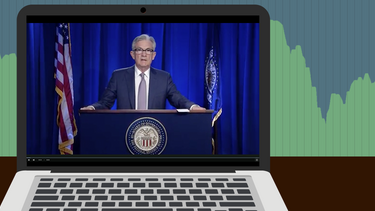
Why did the stock market recover as the economy suffered? Yale SOM’s Shyam Sunder points to the hundreds of billions of dollars injected into the economy by the Federal Reserve and other central banks.
Supporting Patients and Families
Jessica Nymeyer ’16 describes working on the palliative care team at the Montefiore Medical Center in the Bronx.
Frontline Healthcare Providers Need Proactive Mental Health Care
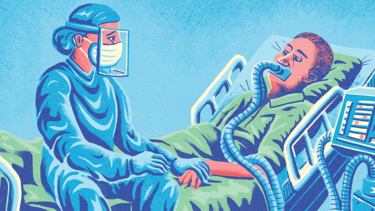
The devastating mental health consequences of working on the front lines of the COVID-19 pandemic are already becoming apparent. Yale SOM’s Julia DiBenigno and Harvard’s Michaela Kerrissey propose assigning dedicated mental health personnel to frontline medical units.

U.S. Jobs Numbers Show an Uptick from a Grim Baseline
We asked labor economist Barbara Biasi what can be understood from the latest Employment Situation Summary—including whether the numbers are accurately reflecting the effects of a fast-moving crisis.

An App as a Lifeline for Immigrant Communities
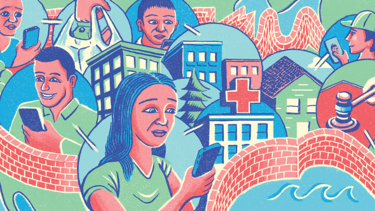
Laura Arrazola ’19, a graduate of Yale SOM's Master of Advanced Management program, describes her experiences managing a virtual community that helps hard-hit immigrants navigate the pandemic.
Why Did the Stock Market Bounce Back While COVID-19 Cases Kept Rising?
According to preliminary research by Yale SOM’s Peter Schott and his co-authors, investors may be adjusting prices based on whether previous predictions of total infections seemed overly optimistic or pessimistic.

Leading through COVID: An Alumni Conversation
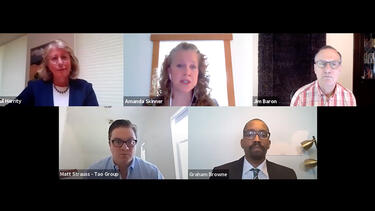
We recently convened a group of Yale SOM alumni, leaders of organizations in a variety of industries, for a conversation about the evolving challenges they have faced during the COVID-19 pandemic.