All Insights Articles
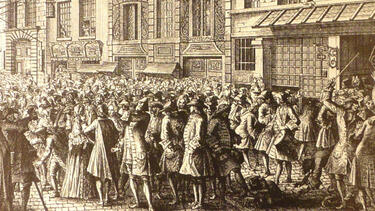
Classroom Insights: Lessons from the First Stock Bubble
Each time it happens, it seems in retrospect like people have lost their minds, and that such widespread madness could never happen again. And then it happens again. Yale SOM professor William Goetzmann looks back at an investing mania from the 18th century to better understand the forces that can create such distortions.
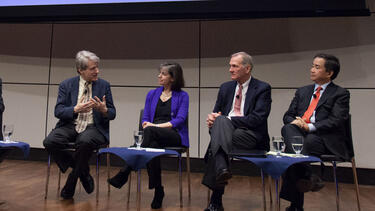
Is Innovation Enough to Make People Healthier?
The Yale School of Management brought together the FDA commissioner, the head of a health insurance company, the CEO of an Internet media empire, and the incoming chief of England’s National Health System to discuss the future of healthcare innovation and the state of care itself.
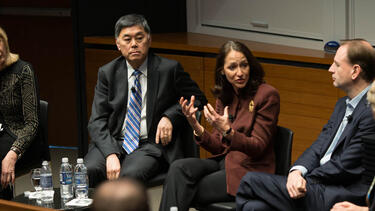
Is Sustainability Essential to the Mission?
Perhaps the strongest argument for environmental sustainability within an organization is that it is critical to the mission. Deputy Assistant Secretary of the Army Richard Kidd ’93 explains why strategic thinking about sustainability is essential for the military.

A Scientific Approach to Increasing Diversity in the Sciences
To reduce subtle biases that limit women and minority academic scientists, research universities should design diversity programs that adhere to rigorous scientific standards, according to a new paper co-authored by Professor Victoria Brescoll.
When Does Regulation Work?
Regulation is often a contentious issue, but most agree that some is necessary and too much is harmful. How do you find the sweet spot? Yale Insights asked practitioners to talk about regulation that impacts their industries.
What Sparks Social Change?
Social structures, attitudes, and laws can seem unchangeable—and then in the historical blink of an eye, a society is transformed. What prompts such change? Margaret Marshall, the judge who wrote a key decision in the development of same-sex marriage in the U.S., says it takes a lot more than any one court case.

Nineteen Ways to Boost Innovation in Your Company
Bureaucracy can stifle creativity. But organizations need timelines, rules, and hierarchies to direct and nurture productive innovation. Here are nineteen ideas for leveraging the creative capabilities in your workforce, as tried and tested by leaders in the field.
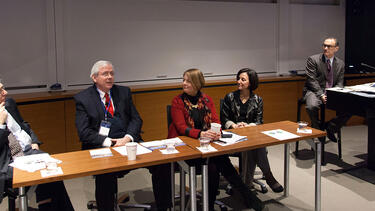
How Should Business Schools Prepare Students for a Global Economy?
What skills and knowledge do future leaders need to navigate an ever-shifting global economy? And how is the mission of business schools changing in response?
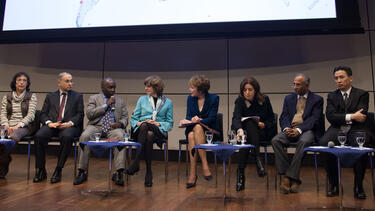
What Do Social Entrepreneurs Do?
Four Yale SOM graduates who have founded and run organizations—both for-profit and nonprofit—that aim to have large-scale social impact talked about their experiences in the fast-developing field of social enterprise.
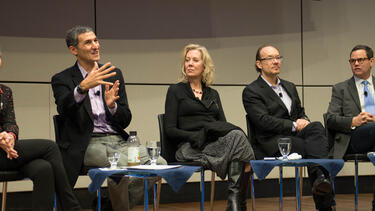
Can Finance Do Good?
The concluding discussion of the three-day Business + Society conference was titled “Finance in Society,” and dealt with both the tension and the possibility in that relationship.