Three Questions
Will COVID-19 Force Us to Rethink Our Healthcare System?
Since health insurance is tied to employment in the United States, Americans are losing their insurance just as they need it most. We asked economist Fiona Scott Morton, an expert on the healthcare industry, what a better system would look like.

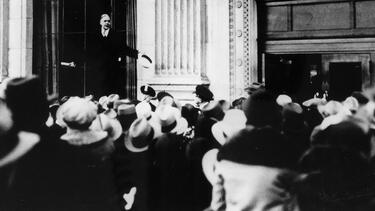
How Will We Tell the Story of COVID-19?
We asked Yale SOM’s Robert Shiller, whose latest book is 'Narrative Economics,' to tell us what collective stories are forming around the pandemic and what they might mean for our economic future.
What Is the Impact of Trump’s Immigration Order?
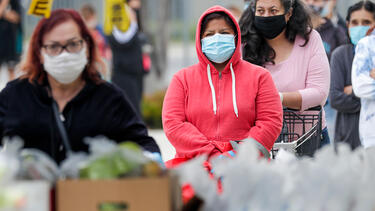
We asked Cristina Rodríguez of Yale Law School, whose research interests include immigration law and policy, to explain the consequences of President Donald Trump's April 22 proclamation on immigration during the COVID-19 crisis.
Can Big Data Fight a Pandemic?
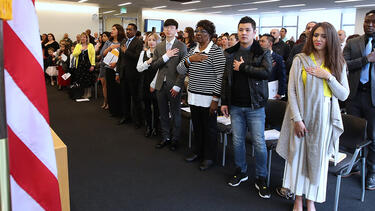
The COVID-19 crisis has intensified the debate over big data and privacy. Governments are pulling together data from public and private systems in order to predict and counter the spread of COVID-19. But setting aside privacy protections in a time of crisis could lead to new, permanent norms.

Time to Put on a Mask
A team of Yale researchers says we should all be wearing cloth masks, but give the surgical masks to healthcare workers.

When Corporate Acquisitions Affect Healthcare
Companies often purchase competitors, not to acquire their ideas and products, but to shut them down. A recent report raised questions about whether such an acquisition may be partially responsible for a shortage of ventilators in the United States.

How Is the Pharmaceutical Industry Responding to COVID-19?
As pharmaceutical companies work to develop potential vaccines and treatments for COVID-19, they are operating under extreme pressure—as well as the restrictions on movement and interaction that are affecting all of us.

Making Sense of A Record-Breaking Wave of Unemployment Claims
A greater share of Americans filed for unemployment insurance in the week ending March 21 than in any prior week in American history. We asked Yale SOM's Paul Goldsmith-Pinkham for his perspective on this alarming statistic.
Economic Competition in a Time of Crisis
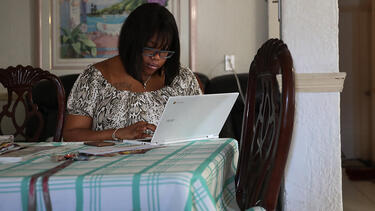
What will the sudden economic shock mean for competition and antitrust policy? We asked Yale SOM’s Fiona Scott Morton, an economist who served in the Antitrust Division of the U.S. Department of Justice, for her perspective.

Crashes and COVID-19 in Historical Context
The stock markets are reeling as fear and uncertainty about the global pandemic grow. We asked Yale SOM’s William Goetzmann, whose research includes financial history, to put the volatility into historical perspective.